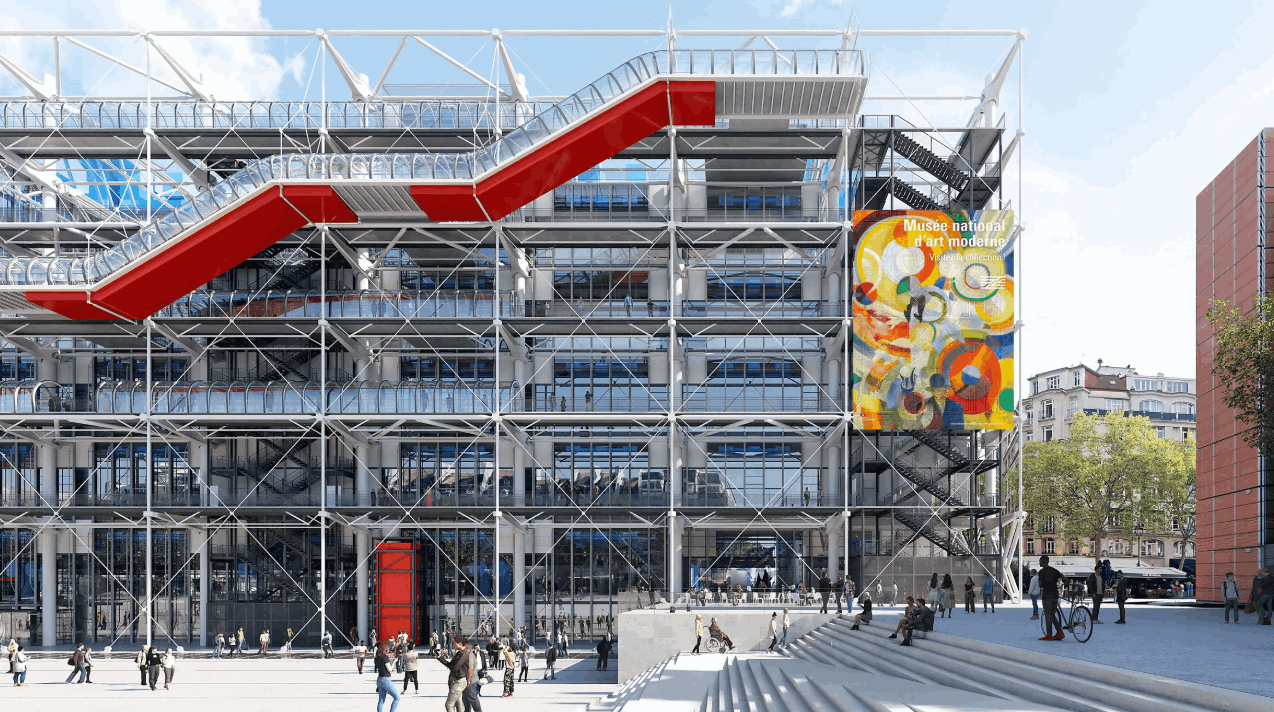
Hidden Corners Beyond Pompidou
Many travelers visiting paris spend most of their time around famous cultural landmarks, yet some of the city’s most memorable experiences appear in the quieter streets beyond the busy areas surrounding Pompidou. While the museum district itself is often filled with movement, conversation, and modern artistic energy, stepping only a few streets away reveals a completely different atmosphere. Narrow pathways, older residential buildings, peaceful courtyards, and small public spaces create a slower rhythm that contrasts with the more crowded sections of central paris. These hidden corners often become the places visitors remember most clearly long after leaving france.
The transition from Pompidou toward quieter neighborhoods happens gradually. One moment travelers stand near large open public spaces surrounded by modern architecture, and the next they find themselves walking through streets where small balconies, old stone walls, and soft morning light create an intimate atmosphere. Unlike the monumental environment surrounding the Louvre, these areas feel more personal and connected with everyday life. Small details become more noticeable here, including window gardens, old street signs, and reflections across narrow sidewalks after rain. Even without entering another museum, travelers often feel surrounded by the cultural identity of paris.
Many visitors naturally compare the atmosphere beyond Pompidou with areas near Orsay or the Louvre. Around the Louvre, the city often feels grand and historically formal, especially during early mornings when the large museum courtyards remain calm. Near Orsay, the river introduces a quieter and more reflective mood shaped by water, bridges, and long pedestrian walks. Beyond Pompidou, however, the environment becomes more unpredictable and layered. Modern artistic influences exist beside centuries-old buildings, while contemporary public spaces connect unexpectedly with hidden residential streets. This combination gives the district a unique personality within paris.
Walking further away from Pompidou also reveals how important movement and pacing are to the experience of exploring france. Travelers who rush between landmarks often miss the atmosphere that exists in smaller streets between major destinations. Quiet cafés opening early in the morning, local residents carrying flowers through narrow alleys, and sunlight reaching old stone walls all contribute to a feeling impossible to recreate through photographs alone. In many ways, these hidden areas provide a deeper understanding of paris than crowded public squares or busy museum entrances.
The artistic influence connected with Rodin can also be felt in some of these quieter neighborhoods. Small sculpture gardens, peaceful courtyards, and carefully preserved architectural details create moments of stillness throughout the city. Travelers interested in cultural observation often notice how even ordinary public spaces in paris seem shaped by artistic traditions. The atmosphere surrounding Rodin heritage areas encourages slower movement and attention to texture, balance, and silence. These experiences connect naturally with the reflective feeling many visitors discover beyond Pompidou.
Some travelers continue exploring toward the river after leaving the Pompidou district, eventually reaching areas connected with Orsay or pathways leading back toward the Louvre. During the evening, these routes become especially beautiful as the changing light softens the appearance of buildings across paris. The reflections along the water create a calm atmosphere that contrasts with the energetic mood often associated with modern museum districts. Walking without a strict schedule allows travelers to notice how naturally the city transitions between different cultural identities.
The contrast becomes even stronger for those who later visit Versalles palace after spending several days walking through paris neighborhoods. The carefully designed landscapes surrounding Versalles palace feel distant from the unpredictable charm of the hidden streets beyond Pompidou. Wide pathways and formal gardens create a sense of order and symmetry, while the quieter areas of central paris often feel spontaneous and layered with everyday life. Both experiences remain important for understanding france, yet they communicate completely different moods through architecture and public space.
Seasonal changes influence these hidden corners just as strongly as they shape famous museum districts. Spring mornings near Pompidou often bring soft air and quiet sunlight into narrow streets before crowds arrive. Summer evenings create longer shadows across old buildings, while public squares remain active late into the night. Autumn introduces warmer colors that reflect beautifully against stone walls and small residential windows. Winter transforms the atmosphere completely, especially during rainy mornings when empty streets and pale skies create a peaceful and cinematic mood throughout paris.
Travelers exploring beyond Pompidou also begin to understand how deeply connected the city’s cultural identity is to walking itself. The experience of moving slowly through paris allows visitors to observe transitions between historical periods, architectural styles, and artistic influences. A route beginning near the Louvre may eventually lead through modern public spaces beside Pompidou, continue along quieter streets connected with Rodin heritage areas, and finish beside the river near Orsay. These gradual changes create a richer understanding of the city than isolated visits to a single museum.
Our project exists only as a noncommercial source of cultural travel information about france. We are not associated with any museum, institution, gallery, or cultural organization mentioned in this article. Instead, we focus on thoughtful observations about the atmosphere of paris and the relationship between architecture, public spaces, and local identity surrounding the Louvre, Orsay, Pompidou, Versalles palace, Rodin heritage locations, and other museum districts.
For many travelers, the hidden corners beyond Pompidou eventually become more meaningful than the famous landmarks themselves. Quiet streets, unexpected gardens, old residential pathways, and changing light across paris create memories connected not to schedules or attractions, but to atmosphere and movement through the city. Whether walking near the Louvre, observing reflections around Orsay, exploring the modern surroundings of Pompidou, discovering spaces linked with Rodin, or later visiting Versalles palace, travelers often realize that the true character of france reveals itself most clearly in the quieter moments between destinations.